Organic Lawn Care: A Michigan Homeowner’s Guide
Interest in organic lawn care has grown steadily as Michigan homeowners look for ways to maintain healthy, attractive lawns while reducing the chemical inputs that affect their families, pets, and the state’s lakes and waterways. Top Lawn has built our business around organic and low-impact lawn care approaches that work — not just in theory, but in Michigan’s actual soil and climate conditions.
What Is Organic Lawn Care?
Organic lawn care uses naturally derived products — composts, plant-based fertilizers, biological pest controls, and soil amendments — instead of synthetic chemicals to build and maintain lawn health. The core philosophy is feeding the soil rather than feeding the grass: building a biologically active, nutrient-rich soil ecosystem that supports strong turf from the ground up. This approach is slower to show results than synthetic programs but builds long-term soil health that reduces input requirements over time.
Organic Fertilization Options for Michigan Lawns
Several naturally derived fertilizer options work well for Michigan’s cool-season grasses:
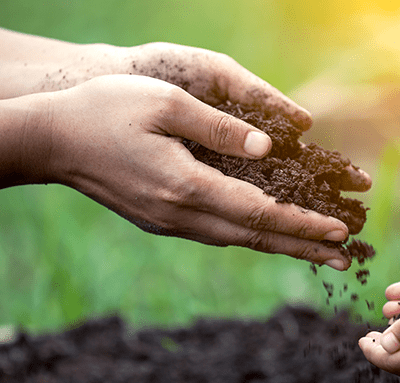
- Compost — the cornerstone of organic soil building; top dressing with quality compost annually adds organic matter, improves microbial activity, and gradually improves soil structure in Michigan’s clay-heavy soils
- Feather meal and blood meal — high-nitrogen organic sources that release nutrients as soil microbes break them down; ideal for fall feeding and spring green-up applications
- Bone meal — a phosphorus-rich organic source that supports root development; useful for overseeding applications
- Kelp meal and seaweed extracts — micronutrient-rich organic amendments that support stress tolerance and overall plant health
- Milorganite (biosolid fertilizer) — a widely available organic nitrogen source that feeds slowly and has been proven effective on cool-season Michigan turf for decades
Organic Weed Control
Weed control is where organic programs require the most patience. Synthetic pre-emergent herbicides have no direct organic equivalent, so organic weed management relies primarily on cultural practices: maintaining a dense, thick lawn that outcompetes weeds, proper mowing height, timely overseeding to fill bare spots, and corn gluten meal as a natural pre-emergent option. Corn gluten meal inhibits root development in germinating seeds and has some efficacy as a natural pre-emergent, though it requires consistent, multi-year application to build effectiveness and is far less reliable than synthetic alternatives.
Organic Pest and Disease Management
Michigan lawns face grub pressure from Japanese beetles and European chafers, and organic control options are available and effective when timed correctly. Beneficial nematodes — microscopic organisms applied to moist soil — parasitize and kill white grubs naturally and are Michigan-safe, pet-safe, and effective when applied correctly in late summer. Milky spore disease is another biological option specifically for Japanese beetle grubs, though it requires multiple years of application to establish in the soil. For fungal disease pressure, organic fungicides containing copper or sulfur provide some protection, though they are generally less effective than synthetic alternatives.
Setting Realistic Expectations
Organic lawn care programs require patience, particularly in the transition period when moving from a synthetic program. Soil biology takes time to rebuild, and organic nutrient release is dependent on soil temperature and microbial activity — meaning organic fertilizers work more slowly in cool spring and fall conditions than synthetic quick-release products. Most organic programs show significant improvement over two to three growing seasons as soil health builds. Results in year one may be modest compared to a synthetic program.
Why It Matters in Michigan
Michigan’s abundance of lakes, rivers, and groundwater makes chemical runoff from residential properties a genuine environmental concern. Organic programs that improve soil structure and water retention reduce runoff, and naturally derived products don’t carry the same aquatic toxicity concerns as some synthetic pesticides. For homeowners near Michigan’s water resources, organic programs are a meaningful way to enjoy a well-maintained lawn while protecting what makes Michigan special.
Top Lawn & ExperiGreen: Michigan’s Organic Lawn Specialists
Organic lawn care done well requires the right products, the right timing, and an understanding of Michigan’s soil and growing conditions. Top Lawn brings all three to every lawn we service. Contact us today to learn about our organic lawn care programs and what they can do for your Michigan property.